
What Is a Warehouse Management System?
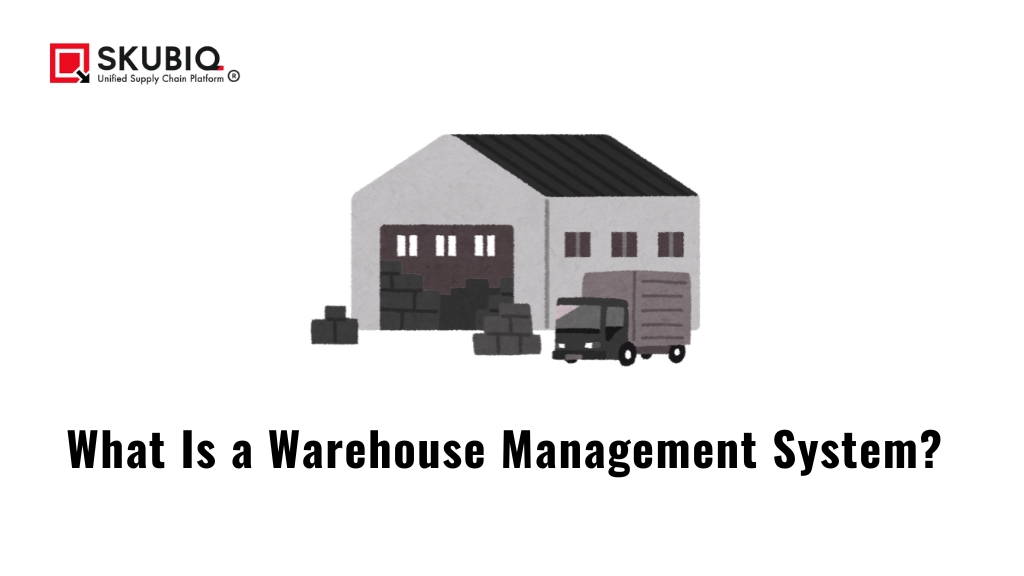
A Warehouse Management System (WMS) is software that controls and optimizes every step of warehouse operations—from receiving and put-away to picking, packing, and shipping—delivering real-time visibility, accuracy, and efficiency. SKUBIQ’s cloud-based WMS automates workflows, integrates with ERP and e-commerce platforms, and scales to meet the needs of small businesses through enterprise distribution centers.
Why Businesses Need a WMS
A modern WMS is essential for:
- Reducing Errors: Automated scanning and validation cuts misplaced orders and stock discrepancies.
- Increasing Throughput: Streamlined workflows and dynamic slotting boost picking and packing speeds.
- Improving Visibility: Real-time tracking of inventory and tasks ensures on-time shipments.
- Cutting Costs: Optimized space utilization and labor planning lower operational expenses.
Core Functions of a WMS
Inbound Management
Managing goods receipt, quality checks, and put-away to ensure inventory accuracy and storage efficiency.
Inventory Control
Maintaining real-time stock levels across multiple locations, enabling accurate cycle counting and preventing stockouts.
Order Fulfillment
Automating order consolidation, wave planning, picking, and packing to meet customer SLAs and support omni-channel sales.
Shipping & Yard Management
Coordinating carrier selection, label printing, dock door assignment, and yard check-in/check-out for efficient dispatch
Types of WMS: Cloud vs. On-Premise
Cloud-Based WMS: Rapid deployment, minimal IT overhead, automatic updates, and anywhere access.
On-Premise WMS: Greater control and customization but requires dedicated infrastructure, maintenance, and upgrade costs.
How SKUBIQ’s WMS Works
Key Features
Auto Data Capture: Barcode and RFID scanning for error-free transactions and faster operations.
Dynamic Slotting: Automated re-allocation of storage locations based on throughput and product velocity.
Omni-Channel Fulfillment: Centralized order management across marketplaces, webstores, and retail.
3PL Billing & Reporting: Accurate customer invoicing and KPI dashboards for performance tracking.
Integrations
Seamlessly connects with ERP systems (e.g., Sage X3), e-commerce platforms (Shopify, Amazon), last-mile carriers, and third-party APIs to unify your tech stack.
Deployment & Scalability
SKUBIQ’s SaaS architecture supports single–site SMBs to multi-warehouse enterprises, scaling resources and users on demand.
Key Takeaways:
- A WMS automates and optimizes every warehouse process.
- Cloud-based solutions like SKUBIQ reduce IT overhead and accelerate time to value.
- Core WMS functions include inbound, inventory control, order fulfillment, and shipping.
- SKUBIQ integrates with major ERPs, e-commerce platforms, and carriers.
- Flexible, subscription-based pricing with fast deployments enables rapid ROI.
Ready to transform your warehouse?
Start your 14-day free trial with SKUBIQ today and experience streamlined, error-free operations.
What is the difference between WMS and ERP?
A WMS specializes in warehouse operations—receiving, storage, order fulfillment, and shipping—while an ERP covers end-to-end business processes, including finance, HR, and procurement.
How much does WMS implementation cost?
Costs vary by features, user count, and integration complexity. SKUBIQ’s plans start at $49/user/month, with transparent pricing tiers and no hidden fees.
Can a WMS integrate with existing software?
Yes. SKUBIQ offers robust public APIs and pre-built connectors for popular ERPs, e-commerce platforms, and logistics systems.
Is cloud-based WMS secure?
SKUBIQ uses industry-standard encryption, role-based access, and regular security audits to ensure data privacy and compliance.